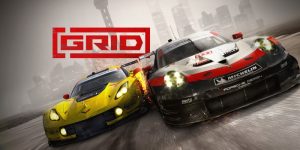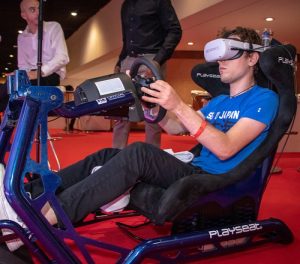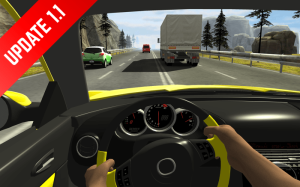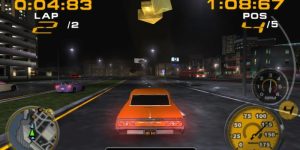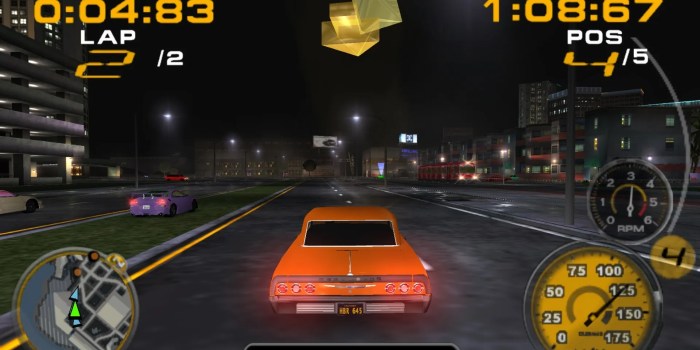
Ever dreamt of burning rubber down city streets, outmaneuvering rivals, and customizing your dream car? Street racing games offer that adrenaline-pumping experience, transporting players into a world of high-octane competition and stylish rides. From pixelated 8-bit beginnings to today’s hyper-realistic simulations, these games have evolved dramatically, captivating millions with their blend of intense gameplay, customization options, and the thrill of the illegal race.
But it’s more than just speed; it’s about the community, the competition, and the constant pursuit of the perfect build. Let’s dive into the fast lane and explore the world of street racing games!
This exploration will cover the historical evolution of street racing games across various platforms, examining key features that have driven their enduring popularity. We’ll dissect the game mechanics, from handling physics to customization depths, comparing popular titles and analyzing monetization strategies. Furthermore, we’ll explore the impact of online multiplayer, the role of community, and the relationship between street racing games and other racing genres.
Buckle up, because this journey is going to be fast and furious!
Game Mechanics and Features in Street Racing Games
Street racing games offer a thrilling blend of speed, customization, and competition. Their appeal stems from a combination of realistic (or stylized) driving physics, extensive vehicle modification options, and diverse game modes catering to various player preferences. Understanding the core mechanics and features is key to appreciating the genre’s enduring popularity.
Core gameplay typically revolves around navigating challenging courses, often featuring tight corners, jumps, and obstacles, while outmaneuvering opponents. Winning requires skillful driving, strategic use of nitro boosts (where applicable), and effective vehicle upgrades. The experience is further enhanced by the ability to customize cars, creating a personalized racing machine. Progression systems usually involve earning in-game currency or points to unlock new vehicles, parts, and tracks, fostering a sense of accomplishment and encouraging continued play.
Gameplay Mechanics
The core gameplay loop involves racing against AI opponents or other players. Handling varies significantly across titles; some prioritize arcade-style, forgiving controls, while others simulate realistic car physics, demanding precise inputs and a deeper understanding of vehicle dynamics. Customization options range from simple paint jobs and decals to complex engine tuning and performance modifications. Progression is often tied to winning races, completing challenges, or accumulating in-game currency to purchase upgrades and unlock content.
Game Modes
Street racing games typically include a variety of game modes to enhance replayability. The most common include single races, where players compete in a single event; championships, a series of races with cumulative points determining the winner; and free roam, allowing players to explore the game’s environment at their leisure, often with opportunities for impromptu races or challenges. Other modes might include time trials, where players aim to complete a course as quickly as possible, or elimination races, where the last-place racer is eliminated after each lap.
Some games even feature story modes with narrative elements woven into the racing experience.
Customization Options Comparison
The following table compares customization options in three popular street racing games: Need for Speed: Most Wanted (2005), Forza Horizon 5, and Gran Turismo 7. Note that the extent of customization can vary depending on the specific vehicle and game version.
| Game | Visual Customization | Performance Tuning | Other Options |
|---|---|---|---|
| Need for Speed: Most Wanted (2005) | Paint, decals, rims, body kits | Engine upgrades, NOS, suspension | Limited visual variety; performance tuning is impactful |
| Forza Horizon 5 | Extensive paint options, livery editor, body kits, wide-body kits, decals, aero upgrades | Engine swaps, tuning parameters, tire selection, suspension adjustments, aerodynamic fine-tuning | Highly detailed customization; deep tuning options; auction house for car trading |
| Gran Turismo 7 | Paint, decals, rims, some body kits (depending on the car) | Detailed engine tuning, suspension adjustments, tire compounds, aerodynamic adjustments | Focus on realism; customization is often limited by car model; extensive performance tuning; online races and championships |
Realistic Physics Engines
The implementation of realistic physics engines significantly impacts the gameplay experience. Games with advanced physics engines provide a more challenging and rewarding driving experience, demanding precise control and strategic decision-making. These games often reward skilled players with faster lap times and better race results. In contrast, arcade-style games often prioritize fun and accessibility over strict realism, resulting in more forgiving handling and less emphasis on technical driving skills.
The impact of realistic physics is a matter of player preference, with some preferring the challenge of a realistic simulation, while others find the more forgiving nature of arcade-style handling more enjoyable.
The Business of Street Racing Games
The world of street racing games is a lucrative one, fueled by passionate players and innovative developers. Understanding the business side – monetization strategies, development costs, and online considerations – is crucial for creating a successful and sustainable title. This section will delve into the key financial and logistical aspects of bringing a high-quality street racing game to market.
Successful Monetization Strategies in Street Racing Games
Many successful street racing games employ a multi-pronged approach to monetization, combining initial game sales with ongoing revenue streams. This ensures a consistent income and allows for continuous updates and expansions.
- In-App Purchases (IAPs): Games like Need for Speed No Limits and Asphalt 9: Legends successfully utilize IAPs. Players can purchase in-game currency to acquire new cars, upgrades, and cosmetic items. Careful implementation is key to avoid feeling predatory.
- Downloadable Content (DLC): Offering expansions with new cars, tracks, game modes, or story content provides a valuable post-launch revenue stream. Examples include the various DLC packs released for Forza Horizon 5, which introduced new cars, environments, and gameplay features.
- Season Passes and Battle Passes: These timed systems offer players tiered rewards for completing in-game challenges, providing a consistent revenue stream and encouraging continued engagement. Forza Horizon 5 and many mobile racing games effectively use this model.
- Advertising (Mobile Games): Free-to-play mobile racing games often incorporate non-intrusive ads to generate revenue. This is a common practice, but must be balanced to not disrupt the player experience.
Development Costs of a High-Quality Street Racing Game
Creating a high-quality street racing game involves substantial investment across various stages of development. The exact cost varies greatly depending on the game’s scope, platform, and features.
- Team Salaries: This includes programmers, artists, designers, sound engineers, producers, and testers. Salaries can vary widely based on experience and location.
- Engine Licensing and Middleware: Using game engines like Unreal Engine or Unity incurs licensing fees. Additional middleware for physics, animation, and other features adds to the cost.
- Asset Creation: Developing high-quality 3D models, textures, animations, and sound effects is a labor-intensive process. Outsourcing some aspects can help manage costs.
- Marketing and Promotion: Reaching the target audience requires a significant investment in marketing and advertising across various platforms.
- Testing and Quality Assurance (QA): Thorough testing is essential to identify and fix bugs before release. This often requires a dedicated QA team.
A realistic estimate for a mid-sized, high-quality street racing game could range from several million to tens of millions of dollars, depending on the factors mentioned above. Larger, AAA titles can easily exceed this budget.
Key Considerations for Online Street Racing Game Development
Developing an online street racing game presents unique challenges compared to single-player titles. Several crucial aspects must be addressed.
- Server Infrastructure: Robust servers are essential to handle a large number of concurrent players and ensure smooth gameplay. Scalability is crucial for handling fluctuating player populations.
- Network Architecture: Designing a reliable and efficient network architecture is vital for minimizing latency and preventing lag. Careful consideration must be given to data transfer and synchronization.
- Anti-Cheat Measures: Implementing robust anti-cheat mechanisms is critical to maintain a fair and competitive environment. This requires constant vigilance and updates to counter new cheating techniques.
- Community Management: Building and maintaining a positive and engaged community is essential for the long-term success of an online game. Active moderation and communication are crucial.
- Cross-Platform Compatibility: Supporting multiple platforms (PC, consoles, mobile) expands the potential player base but adds complexity to development and testing.
Balancing In-Game Purchases with Fair Gameplay
The delicate balance between monetization and fair gameplay is a significant challenge. Players must feel that their progress is achievable without feeling forced to spend money.
The key is to ensure that IAPs enhance the experience rather than dictate it. Offering cosmetic items or time-saving boosts is generally better received than pay-to-win mechanics.
Successful examples like Mario Kart Tour offer in-app purchases primarily for cosmetic items and boosts, while core gameplay remains accessible without spending. Conversely, games that heavily rely on pay-to-win mechanics often face negative player feedback and decreased player retention. Transparency and player choice are paramount.
Street Racing Games and Related Genres
Street racing games occupy a unique niche within the broader world of driving and racing titles. While sharing common ground with other genres, their distinct features and focus set them apart, creating a specific appeal for players. This exploration will delve into the comparisons and contrasts between street racing games and their relatives, highlighting the key differentiators and potential for genre crossover.
Street Racing Games Compared to Other Driving and Racing Genres
Street racing games differ significantly from other driving game genres. Arcade racers, for example, prioritize fast-paced, often unrealistic, gameplay with a focus on fun and spectacle. Simulators, on the other hand, strive for hyper-realistic physics and handling, demanding precision and skill. Bike games, naturally, focus on two-wheeled vehicles and their unique handling characteristics. Street racing games often blend elements of arcade and simulation, offering a balance between accessible gameplay and a sense of realism, particularly in terms of car customization and tuning.
They also frequently incorporate a strong narrative element and focus on the illicit, underground world of street racing.
Key Differences Between Street Racing Games and Online Car Racing Games
While many street racing games incorporate online multiplayer, there are crucial distinctions between them and online car racing games in general. Online car racing games often encompass a wider range of racing styles, from formula racing to off-roading. Street racing games, however, typically concentrate on illegal street races, often featuring specific car types and customization options reflecting this underground culture.
The emphasis in street racing games is usually on the social aspects of street racing culture, rivalries, and customization, rather than just competitive racing. Furthermore, many online racing games focus on competitive rankings and e-sports, while street racing games may emphasize a more narrative-driven experience alongside the competitive elements.
Potential for Crossover Appeal with Open-World Games
The potential for crossover appeal between street racing games and open-world games is immense. Imagine a street racing game set within a sprawling, detailed open world, allowing players to freely explore the city, discover hidden races, and interact with a vibrant cast of characters. Games like
Need for Speed
Underground* and
Need for Speed
Most Wanted* have already touched upon this, offering open environments for exploration and race discovery. Expanding this concept further, integrating elements of role-playing games, such as character progression and narrative choices, could greatly enhance the immersion and replayability. The addition of side quests, involving car customization, gang rivalries, or even police chases, would further broaden the scope and appeal.
The success of games like
Grand Theft Auto*, which incorporates street racing as one of its many elements, demonstrates the potential of such a fusion.
Defining Features of Street Racing Games
The following bullet points highlight the specific features that distinguish street racing games from typical car racing games:
- Emphasis on Illegal Street Racing: The core gameplay revolves around participating in unsanctioned races, often against rival crews.
- Extensive Car Customization: Players can deeply modify their vehicles, affecting performance, appearance, and handling.
- Underground Culture and Narrative: The games often feature a strong narrative element, immersing players in the world of street racing and its associated culture.
- Focus on Tuning and Performance: A significant aspect of gameplay involves tuning and upgrading vehicles for optimal performance.
- Realistic (or stylized) City Environments: The games often feature realistic or stylized depictions of urban environments, providing diverse racing locations.
- Police Chases and Evasion: Outsmarting the police is often a key element, adding an extra layer of challenge and excitement.
The Impact of Online Gaming on Street Racing Games
The rise of online multiplayer capabilities has fundamentally reshaped the street racing game landscape, transforming them from solitary experiences into vibrant, competitive communities. The ability to race against friends, rivals, and strangers worldwide has dramatically increased the popularity and longevity of these titles, fostering a level of engagement previously unimaginable. This interconnectedness has not only boosted sales but also fueled a constant cycle of updates, expansions, and even the creation of entirely new game genres built upon the foundation of online street racing.Online multiplayer features have significantly extended the lifespan of street racing games.
The initial appeal of a single-player campaign is often supplemented by the ongoing competition and social interaction provided by online modes. This constant stream of new challenges and the potential for community building keeps players invested long after they’ve conquered the offline content. Games like
- Need for Speed* and
- Forza Horizon* exemplify this, boasting active online communities years after their initial release.
Online Multiplayer Modes in Street Racing Games
Various online multiplayer modes cater to diverse player preferences, enhancing replayability and fostering a competitive spirit. These modes typically fall into two broad categories: competitive and cooperative. Competitive modes, such as ranked races, time trials, and elimination challenges, pit players against each other for supremacy on the virtual streets. These modes often incorporate ranking systems and leaderboards, fueling the desire for self-improvement and the pursuit of top spots.
Cooperative modes, conversely, emphasize teamwork and shared goals. Examples include group races, where players work together to achieve a collective victory, or collaborative events focusing on completing specific objectives as a team. These cooperative modes offer a different dynamic, prioritizing collaboration and strategic coordination over individual skill.
The Role of Online Communities and Forums
Online communities and forums surrounding street racing games serve as vital hubs for player interaction, knowledge sharing, and community building. These platforms facilitate the exchange of racing tips and tricks, the organization of online events, and the creation of player-generated content such as custom car designs and liveries. Furthermore, these forums provide a space for players to connect with developers, offering feedback and contributing to the ongoing evolution of the game.
The dedicated fan bases fostered by these online communities often contribute to the longevity and success of a street racing game, even influencing future development decisions based on player feedback and requests. The vibrant discussions and shared passion within these communities represent a significant intangible asset for street racing game developers.
Technological Advancements Enabling Seamless Online Gameplay
The evolution of online gameplay in street racing games has been closely tied to advancements in networking technology and game engine capabilities. High-speed internet access, improved server infrastructure, and sophisticated peer-to-peer networking protocols have enabled smoother, more stable online experiences with minimal lag. Game engines have also advanced, incorporating features such as dedicated online servers, improved matchmaking algorithms, and robust anti-cheat measures to create a fair and enjoyable online environment.
The transition from dial-up connections to broadband, and the subsequent development of cloud computing technologies, has significantly improved the responsiveness and reliability of online racing, allowing for larger, more dynamic online worlds. This technological evolution has been crucial in creating the seamless and immersive online experiences that define modern street racing games.
Exploring Related Topics
The intersection of online game development, driving mechanics, and the sometimes controversial inclusion of gambling features presents a fascinating area of study. This section delves into the process of creating online driving games, examines successful examples, and explores the ethical considerations involved in integrating gambling mechanics.
Online Driving Game Development
Creating a successful online driving game requires a multi-stage process, demanding careful planning and execution. A robust game engine, compelling gameplay, and a strong online infrastructure are crucial. Ignoring any of these aspects can lead to a lackluster final product.
Successful Online Driving Games Incorporating Driving Mechanics
Several games have successfully integrated driving mechanics into their core gameplay loop.
- Forza Horizon 5*, for example, offers a vast open world to explore with realistic driving physics and a strong online component. Players can compete in races, collaborate on challenges, and share their creations. Similarly,
- Gran Turismo 7* focuses on realistic simulation, providing a deep and engaging experience for driving enthusiasts. These games showcase the potential for combining immersive driving with compelling online features. The success of these titles stems from a blend of high-fidelity graphics, detailed vehicle models, responsive controls, and engaging online modes.
Online Game Development Stages
A flowchart illustrating the stages of online game development would begin with
- Concept and Design*, progressing to
- Prototyping*, followed by
- Development*,
- Testing*,
- Marketing*, and finally,
- Launch and Maintenance*. Each stage involves multiple sub-tasks. For instance,
- Development* might include programming, art creation, sound design, and network programming.
- Testing* encompasses alpha and beta testing phases to identify and resolve bugs and balance gameplay.
- Marketing* involves strategies to reach the target audience and build anticipation.
- Launch and Maintenance* includes post-launch updates, bug fixes, and content additions to keep the game engaging and fresh.
Ethical Considerations of Gambling Mechanics in Online Games
Integrating gambling mechanics into online games necessitates careful consideration of ethical implications. The potential for addiction and irresponsible spending must be addressed. This includes implementing robust systems to prevent underage gambling, providing clear information on odds and payouts, and offering responsible gambling tools such as deposit limits and self-exclusion options. The use of virtual currency should be clearly defined and its value transparent.
Furthermore, game design should avoid manipulative techniques that encourage excessive spending. The industry is increasingly recognizing the need for responsible design and self-regulation to mitigate the risks associated with integrating gambling elements. Examples of ethical considerations include setting clear limits on spending and providing resources for players struggling with gambling addiction. Successful examples of responsible integration are rare, highlighting the challenge of balancing monetization with player well-being.
Final Conclusion

From humble beginnings to a global phenomenon, street racing games have undeniably left their mark on the gaming landscape. Their enduring appeal lies in the perfect blend of competitive racing, extensive customization, and the vibrant online communities they foster. Whether you’re a seasoned veteran or a newcomer looking to experience the thrill, the world of street racing games offers a diverse and constantly evolving experience.
So, rev your engines, choose your ride, and get ready to leave your mark on the asphalt!
User Queries
What are the best street racing games for beginners?
Games like “Need for Speed: Heat” offer a good balance of accessibility and engaging gameplay for newcomers. “Forza Horizon 5” also provides a less punishing learning curve compared to hardcore simulators.
Are street racing games realistic?
Realism varies greatly. Some games prioritize arcade-style fun, while others strive for realistic physics and car handling. Simulators like “Assetto Corsa Competizione” are highly realistic, but many popular street racing games fall somewhere in between.
How much do street racing games cost?
Prices vary widely depending on the game and platform. Some are free-to-play with in-app purchases, while others are premium titles with one-time purchase costs.
What platforms offer the best street racing games?
PC, PlayStation, Xbox, and Nintendo Switch all host a diverse selection of street racing games, catering to various preferences and budgets.