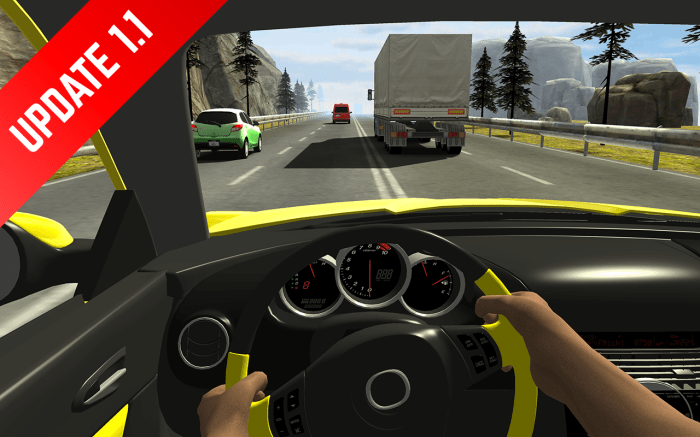
Ever wished your favorite racing game had a turbocharged boost of awesome? That’s where racing game mods come in! These aren’t just tweaks; they’re community-created expansions, transformations, and sometimes, outright reinventions of existing games. From adding ludicrously fast cars to crafting entirely new tracks, the modding community is a vibrant ecosystem of creativity, pushing the boundaries of what’s possible and breathing new life into beloved titles.
Prepare for a deep dive into this thrilling world!
We’ll explore the wild world of racing game modifications, from understanding the current trends and popular games to the technical aspects of creating mods. We’ll also delve into the legal and ethical considerations, the impact on the gaming experience, and how modding connects to the broader landscape of game development. Get ready to discover how passionate fans are shaping the future of racing games!
Types of Racing Game Mods
Revving up your racing game experience? The world of racing game mods is vast and varied, offering a plethora of ways to customize your favorite titles. From subtle tweaks to complete overhauls, mods can dramatically alter the gameplay, visuals, and overall feel of your racing sim. Let’s explore the diverse landscape of racing game modifications.
Racing game mods generally fall into three major categories: car modifications, track modifications, and gameplay changes. Each category offers a unique set of possibilities, allowing players to tailor their experience to their specific preferences. Some mods are simple, while others are incredibly complex, requiring significant technical expertise to install and manage.
Car Modifications
Car modifications focus on altering the vehicles within the game. This can range from simple visual changes like new paint jobs and liveries to complex performance upgrades that significantly impact handling and speed. These mods can transform familiar cars into unique and powerful machines.
Examples of popular car modification types include:
- Visual Overhauls: These mods replace the in-game textures and models of cars with higher-resolution, more detailed versions. Imagine a classic muscle car rendered with photorealistic detail, complete with accurate reflections and realistic wear and tear.
- Performance Tweaks: Mods can adjust parameters like engine power, torque, suspension settings, and aerodynamics. This can create cars that handle differently, accelerate faster, or corner more effectively. Think of transforming a stock sedan into a drift king or a nimble rally car.
- New Cars: Some mods add entirely new cars to the game’s roster, often including vehicles not originally present in the game. This could range from historical race cars to modern hypercars, expanding the variety and choices available.
- Sound Modifications: These mods replace the in-game engine sounds with more realistic or customized audio. This can greatly enhance the immersive quality of the game, adding a new layer of realism.
Track Modifications
Track modifications focus on altering the racing environments. This can range from simple adjustments to existing tracks to the creation of entirely new and unique racing circuits. Track mods can dramatically change the flow and challenge of a race.
Examples of popular track modification types include:
- Reskins: These mods change the visual appearance of existing tracks, for example, transforming a fictional desert track into a snowy mountain pass or a European cityscape track.
- New Tracks: These mods introduce entirely new racing environments, often inspired by real-world locations or completely fictional landscapes. Imagine a meticulously recreated version of the Nürburgring Nordschleife or a fantastical track winding through alien canyons.
- Track Enhancements: These mods add details to existing tracks, such as improved scenery, more realistic textures, or additional environmental elements. This enhances immersion and the overall visual fidelity of the race environment.
- Layout Changes: Some mods modify the actual layout of existing tracks, adding new sections, altering corners, or changing the overall length and difficulty of the circuit. This can dramatically change the racing line and strategic considerations.
Gameplay Changes
Gameplay modifications alter the core mechanics and rules of the racing game. These mods can change everything from the physics engine to the AI behavior, significantly impacting the overall racing experience.
Examples of popular gameplay modification types include:
- Physics Overhauls: These mods modify the game’s physics engine, creating a more realistic or arcade-style driving experience. This could result in more realistic tire physics, improved collision detection, or even a complete shift in handling characteristics.
- AI Enhancements: Mods can improve the intelligence and driving behavior of the AI opponents, making them more challenging and unpredictable competitors. This can lead to more exciting and competitive races.
- New Game Modes: Some mods add entirely new game modes, such as time trials, endurance races, or even completely unique racing challenges not originally present in the game.
- UI/UX Overhauls: These mods change the in-game user interface, improving its clarity, functionality, or aesthetics. This can enhance the overall user experience and make the game more enjoyable to play.
The Modding Process
Creating a racing game mod is a journey into the heart of the game’s code, allowing you to reshape the experience to your liking. It’s a blend of technical skill, creativity, and a healthy dose of patience. The process involves understanding the game’s structure, utilizing specialized tools, and overcoming various challenges to bring your vision to life. This process can range from simple texture swaps to completely overhauling the game’s physics engine.
The creation of a racing game mod typically follows a structured approach, beginning with conceptualization and design, followed by asset creation and implementation within the game engine. Thorough testing and iterative refinement are crucial to ensure stability and a polished final product. The complexity of the process varies significantly depending on the scope of the mod; a simple livery change requires far less effort than a complete track overhaul or the addition of new vehicles.
Required Software and Programming Languages
The tools and languages used in racing game modding vary greatly depending on the game and the mod’s complexity. However, some common tools and languages consistently appear. A strong understanding of at least one programming language is often essential, particularly for more complex modifications.
Many modding communities utilize dedicated modding tools created by other modders or by the game developers themselves. These tools often simplify common tasks, such as importing custom assets or modifying game data. For example, some games provide SDKs (Software Development Kits) with specific tools and APIs (Application Programming Interfaces) tailored to modding. Learning to use these tools effectively is often the first step in successful modding.
- Programming Languages: C++, C#, Lua, and Python are frequently used, depending on the game’s engine and the mod’s requirements. C++ is often used for low-level modifications affecting core game mechanics, while scripting languages like Lua or Python are more commonly used for simpler modifications or additions.
- 3D Modeling Software: Blender (free and open-source) and 3ds Max or Maya (commercial options) are commonly used to create or modify 3D models for vehicles, tracks, and other assets. Knowledge of 3D modeling techniques and UV mapping is essential for creating high-quality assets that integrate seamlessly into the game.
- Texture Editing Software: Programs like Photoshop or GIMP are essential for creating or editing textures, which provide the visual detail for vehicles, tracks, and other game elements. Understanding image formats and texture compression techniques is vital for creating efficient and high-quality textures.
- Game-Specific Modding Tools: Many games offer dedicated modding tools or SDKs, providing APIs and utilities to simplify the process. These tools can range from simple editors for configuration files to powerful scripting environments allowing extensive modifications.
Challenges in the Modding Process
The modding process is not without its hurdles. Understanding the game’s codebase, debugging issues, and ensuring compatibility are common challenges faced by modders. Moreover, the complexity of modern game engines can present significant obstacles for less experienced modders.
One significant challenge lies in understanding the game’s internal structure and how different elements interact. This often requires reverse engineering parts of the game, a process that can be time-consuming and complex. Another major challenge is debugging – identifying and fixing errors within the mod. This can be particularly difficult when dealing with complex interactions between different game systems.
- Reverse Engineering: Understanding the game’s internal workings often requires reverse engineering, a process of analyzing the game’s code to understand its functionality. This can be challenging and time-consuming, especially for complex games.
- Debugging: Identifying and fixing errors in the mod is a crucial part of the process. This can be a complex and time-consuming task, particularly for large and complex mods.
- Compatibility Issues: Ensuring compatibility with different game versions, operating systems, and hardware configurations can be challenging. Mods may break with game updates, requiring constant maintenance and updates.
- Game Engine Limitations: The game’s engine itself may impose limitations on what can be achieved through modding. Certain features might be difficult or impossible to modify without extensive reverse engineering or workarounds.
The Community and Collaboration
The world of racing game modding thrives on a vibrant and interconnected community. These online spaces are more than just forums; they’re collaborative hubs where creativity flourishes, technical expertise is shared, and passionate individuals unite to enhance their favorite games. The dynamics within these communities are complex, reflecting a blend of competition, cooperation, and a shared love for pushing the boundaries of what’s possible within the confines of a game engine.The structure of these communities often involves a network of interconnected platforms.
Dedicated forums, Discord servers, and even social media groups act as central gathering points. Within these spaces, users share their creations, seek help, and engage in lively discussions about modding techniques, game mechanics, and the latest projects. This decentralized structure allows for a high degree of flexibility and organic growth, fostering a diverse ecosystem of modders with varying levels of experience and specialization.
Prominent Figures and Groups
Several individuals and groups have significantly shaped the racing game modding landscape. While pinpointing specific “prominent figures” can be subjective and change over time, certain names frequently appear in discussions regarding innovative modding techniques or particularly impactful mods. For instance, certain individuals known for their expertise in 3D modeling and texture creation often become sought-after collaborators. Similarly, groups dedicated to specific games or modding tools often emerge as leading authorities, offering tutorials, resources, and support to the broader community.
Their collective knowledge and contributions directly influence the quality and diversity of mods available. These groups often function as informal mentorship networks, passing down valuable skills and experience to newer members.
Collaboration and Knowledge Sharing
Collaboration is the lifeblood of the racing game modding community. Complex mods often require specialized skills, and few individuals possess mastery across all areas. Successful projects typically involve teams of individuals working together, each contributing their unique expertise. This might involve a 3D modeler creating realistic car models, a programmer implementing new physics or AI, and a texture artist adding intricate details to the game’s environment.
The sharing of knowledge is facilitated through various methods, including tutorials, documentation, and direct communication between modders. Open-source projects are particularly crucial, as they allow others to learn from the code and contribute to the project’s evolution. This collaborative approach not only accelerates development but also leads to higher-quality mods that benefit the entire community. The collective effort and shared knowledge base allow for a continuous cycle of improvement and innovation within the modding scene.
For example, a particularly effective technique for optimizing car physics, initially developed by one modder, might quickly become adopted and adapted by others, leading to widespread improvements across various racing game mods.
Legal and Ethical Considerations
Creating and distributing racing game mods, while a fun and creative pursuit, treads a legal and ethical tightrope. Understanding the implications of your actions is crucial to avoid potential problems and ensure responsible modding practices. This section will explore the legal landscape and ethical considerations surrounding racing game modification.The legal implications of creating and distributing racing game mods are complex and depend heavily on several factors, including the specific game’s End User License Agreement (EULA), the nature of the mod itself, and the methods of distribution.
Many game developers explicitly prohibit the creation and distribution of mods that alter core game mechanics or infringe on their intellectual property. Violating a game’s EULA can lead to legal action, ranging from cease-and-desist letters to lawsuits. Furthermore, distributing mods that contain copyrighted material, such as music, textures, or models, without permission from the copyright holders can also lead to legal repercussions.
Even if a mod is free, the distribution process must be compliant with the game’s EULA.
Intellectual Property Rights
Respecting intellectual property (IP) rights is paramount in the modding community. Game developers hold copyrights on their games, including the code, assets, and overall design. Mods that incorporate elements from the game without permission infringe on these rights. This includes using copyrighted assets like car models, tracks, and sound effects without explicit authorization. Modifying the game’s code to create new features also requires careful consideration of the game’s EULA, as many agreements strictly prohibit such modifications.
For example, a mod that uses a copyrighted car model from a real-world manufacturer without a license would be a clear violation of copyright law. Similarly, a mod that directly copies and redistributes the game’s code without permission would infringe on the developer’s copyright.
Risks of Unauthorized Mods
Using unauthorized mods carries several risks. Malicious mods can contain malware or viruses that can harm your computer system or steal personal information. Furthermore, using mods that alter the game’s core functionality can lead to instability, crashes, and even permanent damage to your game files. In some cases, using unauthorized mods can also result in your account being banned from online multiplayer servers.
For instance, a mod that grants unfair advantages in online racing, such as unlimited speed or invincibility, would be considered cheating and could lead to account suspension or permanent bans. Similarly, a mod that introduces exploits to gain access to unauthorized game features can result in similar consequences. It’s essential to download mods only from reputable sources and always scan them for malware before installation.
Impact of Mods on the Gaming Experience
Racing game mods possess the remarkable ability to reshape the very core of a game, transforming a familiar experience into something entirely new and exciting. They offer players a level of customization and control rarely seen in commercially released content, extending the lifespan of games and fostering vibrant communities around them. From subtle tweaks to complete overhauls, mods significantly impact gameplay, often exceeding the scope of official DLC.Mods can enhance the original gameplay experience in countless ways.
Imagine transforming a realistic racing simulator into an arcade-style racer with boosted speeds and gravity-defying jumps, or vice versa, adding hyper-realistic weather effects and tire physics to an otherwise simplistic title. They can introduce new tracks, cars, game modes, and even completely overhaul the game’s visual style, injecting fresh life into even the oldest titles. The level of customization is virtually limitless, allowing players to tailor the experience to their exact preferences.
Examples of Transformative Mods
Several mods have dramatically altered the popularity and longevity of racing games. For example, the “Community Track Pack” for Assetto Corsa brought together a massive collection of user-created tracks, significantly expanding the game’s replayability and attracting a huge influx of new players. Similarly, mods for older games like Need for Speed: Underground have revitalized them by introducing updated graphics, new cars, and improved handling models, making them enjoyable for a new generation of players.
These mods not only extend the game’s life but also foster a sense of community and collaborative creativity.
Comparison of Modded vs. Unmodded Gameplay
The differences between modded and unmodded gameplay can be striking. Consider the following comparison:
| Aspect | Unmodded Gameplay | Modded Gameplay | Impact |
|---|---|---|---|
| Track Selection | Limited to the tracks included in the base game. | Potentially hundreds or thousands of community-created tracks, ranging in style and difficulty. | Significantly increased replayability and variety. |
| Vehicle Selection | Limited to the cars included in the base game and any official DLC. | Vastly expanded car list, including fictional and real-world vehicles, often with custom liveries and performance modifications. | Greater choice and customization options, allowing players to drive their dream cars. |
| Graphics | Fixed visual style determined by the game developers. | Improved textures, shaders, and visual effects, often exceeding the visual fidelity of the original game. Could also include completely different visual styles, like cartoonish or futuristic themes. | Enhanced visual appeal and immersion. |
| Gameplay Mechanics | Fixed handling, physics, and AI behavior. | Modified handling, physics, and AI, allowing for everything from arcade-style racing to hyper-realistic simulations. | Allows players to tailor the gameplay experience to their preferences, making it more challenging or more accessible. |
Relationship to Online Game Development

Modding isn’t just a hobby; it’s a vital training ground for aspiring online game developers. By diving into the intricate workings of existing games, modders gain invaluable experience that directly translates to professional game development, fostering innovation and pushing the boundaries of online gaming experiences.Modding provides a practical understanding of game development principles far beyond theoretical knowledge. The process of modifying a game, whether it involves tweaking existing code, creating new assets, or designing entirely new game mechanics, provides hands-on experience with the various aspects of online game development.
This experience allows modders to grasp the complexities of network programming, server-client interactions, and database management – all crucial components of successful online games.
Skills and Knowledge Transferable to Professional Game Development
The skills acquired through modding are remarkably transferable to professional game development roles. Modders often become proficient in programming languages like C++, C#, or Lua, depending on the game engine. They learn to work with game engines such as Unity or Unreal Engine, mastering asset creation pipelines, debugging techniques, and version control systems like Git. Furthermore, the collaborative nature of modding cultivates essential teamwork and communication skills, vital for success in a professional development environment.
For instance, a modder who successfully leads a team in creating a complex modification for a popular racing game demonstrates project management skills highly valued in the industry. The experience of troubleshooting complex issues within a game’s codebase hones problem-solving abilities, a critical asset for any developer.
Application of Modding Skills in Professional Online Racing Game Development
Imagine a scenario where a professional team is developing a new online racing game. They face a challenge: creating a highly customizable car tuning system that allows players to fine-tune various aspects of their vehicles, impacting performance in realistic ways. A modder with experience creating intricate car modification systems for existing racing games would be an invaluable asset.
Their understanding of game mechanics, programming skills, and experience with asset creation would allow them to rapidly prototype and implement features far exceeding the capabilities of a less experienced developer. They could leverage their existing knowledge of physics engines and game balancing to ensure the tuning system is both fun and realistic. Moreover, their experience working within the constraints of an existing game engine would enable them to seamlessly integrate the new system into the game’s architecture.
This example showcases how the seemingly niche skillset of a racing game modder can become a significant advantage in a professional development setting, accelerating development and leading to a superior final product.
Exploring Related Game Genres
The world of vehicular gaming extends far beyond the tarmac. While racing games dominate the scene, modding communities in related genres like online driving sims and motorcycle games present fascinating parallels and unique differences. Examining these connections reveals insights into the diverse approaches to modification, the strengths and limitations of each genre’s modding scene, and the overall impact of community contributions on gameplay.Exploring the modding communities reveals a complex interplay of shared techniques and genre-specific challenges.
Similarities exist in the fundamental desire to enhance gameplay, but the tools and methods vary significantly depending on the game’s engine and mechanics.
Modding Community Comparisons
Racing game modding communities are often large and diverse, encompassing everything from simple skin changes to complex physics overhauls. Online driving sims, such as those focused on realistic truck or bus driving, tend to have smaller, more specialized communities, often focusing on improving simulation accuracy and adding realistic features like improved weather systems or enhanced vehicle damage models. Motorcycle game modding communities occupy a middle ground, often sharing some overlap with racing game modding in terms of visual modifications, but also incorporating unique aspects related to bike physics and handling.
The size and activity level of each community is directly related to the game’s popularity and the ease of modding. For example, highly popular racing titles with well-documented APIs tend to have thriving modding scenes, while more obscure titles may have small, dedicated communities.
Modding Technique Differences
Modding techniques vary depending on the game’s engine and the level of access provided to modders. Racing games often utilize relatively open modding APIs, allowing for extensive modification of game assets, including car models, tracks, and even core gameplay mechanics. Online driving and bike games may have more restricted APIs, limiting the scope of possible modifications. In some cases, reverse engineering is necessary to overcome these limitations, a process that is both time-consuming and potentially risky.
For example, modifying the physics engine in a racing game might involve altering code related to tire grip, aerodynamics, and vehicle weight distribution, whereas in a truck sim, it might focus on factors like suspension, cargo weight, and engine torque. Motorcycle games often require specialized techniques for handling the unique physics of two-wheeled vehicles, including lean angles, wheelspin, and rider animation.
Visual Representation of Modding Complexity
Imagine a three-tiered pyramid. The base represents the simplest modding tasks, such as texture replacement or skin creation. This level is common to all three genres (racing, driving sims, bike games). The middle tier represents more complex modifications, such as modifying vehicle handling or adding new tracks. Racing games occupy a larger portion of this middle tier due to their typically more accessible modding APIs and larger communities.
Online driving sims are represented by a smaller portion of the middle tier, reflecting their often more restricted modding environments. Bike games occupy a similar space to racing games in the middle tier, but with a slightly smaller area due to the added complexities of two-wheeled vehicle physics. The top tier represents the most complex modifications, such as overhauling the game’s physics engine or creating entirely new game modes.
Racing games again have a larger presence at this level, but the other two genres also show a presence, albeit smaller, reflecting dedicated modding efforts to enhance realism or add unique gameplay features. The pyramid visually illustrates that while all three genres allow for modification, the complexity and extent of those modifications vary considerably based on factors like game engine, community size, and the inherent complexities of the vehicle types being simulated.
Unrelated Topics
Let’s take a sharp turn from the world of racing game mods and explore some seemingly disparate yet fascinating topics. We’ll delve into the online car racing game market, the intricacies of gambling card games, the roles within gambling commissions, and the legal framework surrounding online gambling. Buckle up, it’s going to be a wild ride!
The connections between these seemingly unrelated areas might not be immediately obvious, but they all involve complex systems, regulations, and a significant amount of human interaction, much like the modding community itself. Each requires careful management, strategic planning, and a deep understanding of the rules of engagement.
Online Car Racing Game Market Overview
The online car racing game market is a massive and dynamic industry, encompassing free-to-play titles with in-app purchases, subscription-based services, and premium releases. Major players like Electronic Arts (with its Need for Speed series), Codemasters (with its F1 series), and Microsoft (with Forza Horizon) dominate the market, alongside numerous smaller independent developers. Revenue streams vary greatly, depending on the game’s business model, but in-game purchases, DLC (Downloadable Content), and microtransactions are significant contributors.
The market is constantly evolving, with new technologies like VR and improved online connectivity continually shaping the player experience and competitive landscape. The competitive nature of the market pushes developers to create increasingly immersive and realistic experiences, leading to technological advancements and engaging gameplay.
Gambling Card Game Mechanics and Regulations
Gambling card games, such as poker, blackjack, and baccarat, involve specific rules and mechanics that determine the outcome and the players’ chances of winning. These games rely on chance, skill, and strategy. Poker, for example, uses a combination of dealt cards and betting rounds to determine the winner, while blackjack involves getting a hand value as close to 21 as possible without exceeding it.
Baccarat, on the other hand, is a game of chance where players bet on the outcome of two hands – the “player” hand and the “banker” hand. Gambling chips are used as tokens representing monetary value within the game, simplifying transactions and managing bets. Regulations vary by jurisdiction, with many regions having strict rules regarding the legality, operation, and taxation of gambling card games.
These regulations often address issues such as licensing, age restrictions, and responsible gambling practices.
Gambling Commission Employee Responsibilities and Characteristics of Gambling Cities
A gambling commission employee’s responsibilities vary depending on their specific role, but generally involve enforcing regulations, investigating potential violations, licensing operators, and promoting responsible gambling practices. They might be involved in auditing financial records, overseeing compliance with anti-money laundering regulations, or handling customer complaints. The characteristics of gambling cities often include a high concentration of casinos, hotels, and entertainment venues catering to gamblers.
These cities often see significant economic activity related to the gambling industry, but also face challenges related to problem gambling, crime, and regulation enforcement. Las Vegas, Nevada, is a prime example of a city heavily reliant on the gambling industry, while Macau, a Special Administrative Region of China, is another prominent example of a city where the gambling industry plays a significant role in the local economy.
These cities often have dedicated regulatory bodies to oversee and manage the gambling industry within their jurisdictions.
Legal and Regulatory Landscape of Online Gambling
The legal and regulatory landscape of online gambling is complex and varies significantly across jurisdictions. Some countries have fully legalized and regulated online gambling, while others have completely banned it. Many jurisdictions operate under a system of licensing and regulation, requiring operators to obtain licenses and adhere to strict rules regarding responsible gambling, data protection, and anti-money laundering measures.
The legal framework frequently addresses issues such as the licensing of online gambling operators, the protection of players, and the prevention of underage gambling. The enforcement of these regulations often involves cooperation between different regulatory bodies and international organizations. The ongoing debate over the legalization and regulation of online gambling continues to shape the industry’s development and the consumer experience.
Final Review
So, whether you’re a seasoned modder, a curious gamer, or just someone who loves a good speed boost, the world of racing game mods offers endless possibilities. From the intricate details of code to the collaborative spirit of the community, it’s a testament to the power of player creativity and the enduring appeal of pushing the limits of what a game can be.
So, fire up your engines, and get ready to explore the exciting future of modded racing!
Frequently Asked Questions
What software do I need to create racing game mods?
It varies wildly depending on the game! Some games have user-friendly modding tools, while others require programming knowledge and specialized software like 3D modeling packages and code editors.
Are all racing game mods safe?
Absolutely not. Downloading mods from untrusted sources can expose your system to malware or viruses. Stick to reputable modding communities and always scan downloads with antivirus software.
Can I make money from creating racing game mods?
While most modding is done for fun, some modders find success through Patreon or selling their mods (if the game’s licensing allows it). It’s rarely a full-time gig, though.
How do I install a racing game mod?
Installation instructions vary greatly depending on the mod and the game. Each mod usually provides detailed instructions; carefully follow them to avoid issues.